Restoring a grey, weathered timber deck
When the boards are silver, fuzzy and tired, you can often bring them back without a skip. When you cannot, stop sanding and start probing the frame.
By Priya Menon, Materials writer · 11 April 2025 · Updated 5 March 2026
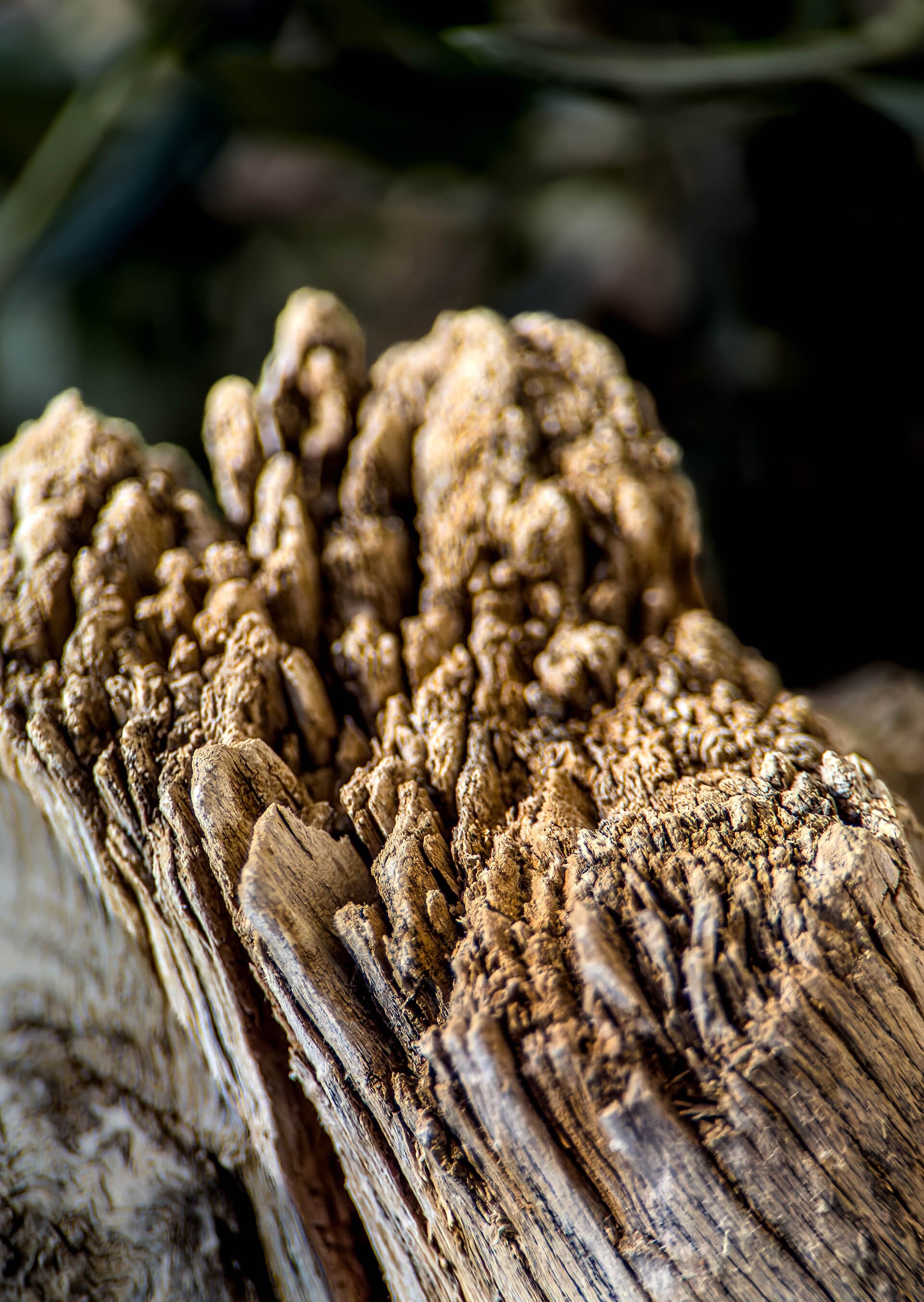
Photograph: MacrofyStudio. Weathered wood grain texture macro closeup detail.jpg. CC BY 4.0. Source on Wikimedia Commons. See all image credits.

Weathered is not the same as failed. Ultraviolet light greys the surface of hardwood in a couple of summers. That grey can be handsome if you meant it. It can also be a dirty, splintered pelt that holds mould and punishes bare feet. Restoration is the work of telling those apart.
Melbourne adds a black winter film and a summer that cooks whatever oil is left in the high spots. A deck that is only grey on the north and slimy on the south is a typical local patient.
Diagnose before you hire a sander
Walk it. Soft spots, sprung boards, and a bounce that was not there five years ago are structure, not cosmetics. Push a screwdriver into suspect joist ends. Look at the ledger. If the frame is going, restoration of the face is paint on a wreck. See replace versus repair.
If the frame is sound, look at the boards. Surface grey with hard timber underneath: restore. Deep cupping, split ends, boards worn thin at the barbecue, nails that have tented: replace boards, then restore the rest.
Hidden nails from a 1990s gun-fix will tear a sanding belt and your feet. Plan a refasten to stainless if the deck is still nailed. See fasteners.
Clean, brighten, then decide on sand
Start with a wash designed for timber. Lift the mould. Rinse. An oxalic brightener can take the grey toward the original colour on merbau and many eucalypts. That step alone is enough for some owners who then choose to silver more evenly or to oil.
Sand if there is a failed film, raised grain from an old pressure wash, or stains that chemistry will not lift. Use a random orbital or a floor sander with a person who has done decks, not a belt sander in a hurry. Ease edges. Do not chase a furniture finish on a floor that will weather again in a year.
Pine is softer; you can dish it in an afternoon. Treated pine dust is not a craft activity. Mask, and consider replacement boards instead of heroic sanding.
Recoat with a system you can live with
Once the timber is clean and dry, pick oil, stain or silver and keep it. A restored merbau that is oiled once and then ignored will blotch. A restored spotted gum left to silver after a good clean can look intentional.
If the old coating was a thick stain, you may never get back to “new timber” without removing more face than you have. A slightly pigmented oil that evens the story is more honest.
When restoration is the wrong spend
If half the boards need replacing, price a new wearing surface. Mixed new and old hardwood can be stained into a family; it can also look like a patchwork. Reclaimed replacements need thickness to match.
If you are already paying for scaffold, a skip and a week of labour, ask whether composite on the existing (sound) frame would end the cycle. Sometimes the restoration urge is nostalgia for a timber that has already given you fifteen years.
A good restoration smells like wet timber and then like oil. A bad one smells like a belt sander and regret. Probe first.
Neighbours, dust and the week of the sander
Sanding a deck is a neighbourhood event. Dust goes over the fence onto the cream hatchback. Tell people. Mask the sliding door. Do not sand in a north-westerly unless you enjoy apology.
Collect the dust. Treated pine dust is not garden mulch.
After the restoration
The timber is thirsty and photogenic. It is also softer in the fibres you just cut. Wait the full dry and cure time before the party. Put felt on the furniture. Do not drag the barbecue.
Then return to the ordinary calendar: wash, maybe oil, scoop gaps. Restoration is a reset, not a personality transplant. Melbourne weather will start again tomorrow.
Colour matching new boards to old
A replaced bay of merbau will look like a new table in an old kitchen. Oil will close the gap a little. Time will close more. A tinted oil can hurry the social peace. Do not expect invisibility.
If more than a few boards are new, consider brightening the whole floor so the family is closer.
Restoration is patience plus a sander you did not over-use. Melbourne sun will finish the blend whether you like it or not.
When “restore” is a way of avoiding a decision
Sometimes the restoration quote is close to a new wearing surface. At that point, ask what you want the next fifteen years to be. If you want to stop this conversation, composite or a new hardwood on a sound frame may be kinder.
If you love this timber, restore it properly and then maintain it. A half sand and a cheap film is how you pay twice.
Weathered boards have already given you a lot of summers. Honour them with an honest diagnosis, not with a miracle bottle.
Keep a sample of the oil and a note of the grit you sanded to. Future you, standing in the shed in three years, will not remember. The restoration only lasts as long as the next honest wash. Write the recipe on the tin. Stop when the timber is clean and even enough, not when it looks like furniture. A deck is a floor in the weather. The restoration that lasts is the one that leaves some honesty in the grain. If the restoration quote includes a thick film “to protect the work”, decline that part. You are trying to get back to timber, not to invent a peel in eighteen months. Then put the furniture back with felt pads and accept that year two will be a wash, not another sand. That is a successful restoration.
Questions we are asked
- Can a grey deck be made honey-coloured again?
- Often, yes, if there is sound timber under the grey fibres. Clean, brighten, sand lightly if needed, then oil. Deep black rot, cups you can hide a pencil in, and boards that flex off the joist are replacement, not restoration.
- Is sanding a deck a good idea?
- A light sand to remove fuzz and failed film can be. Aggressive sanding that dishes soft grain and thins 19 mm hardwood is how you buy a new deck sooner. Never sand treated pine into a cloud you breathe.
Canonical URL: https://deckingmelbourne.com.au/articles/restoring-weathered-timber-deck