Cleaning black mould off a Melbourne deck after winter
August leaves a black film on south-facing boards. What that film is, how to lift it without destroying the grain, and how to make next winter less slimy.
By Priya Menon, Materials writer · 16 September 2025 · Updated 1 April 2026
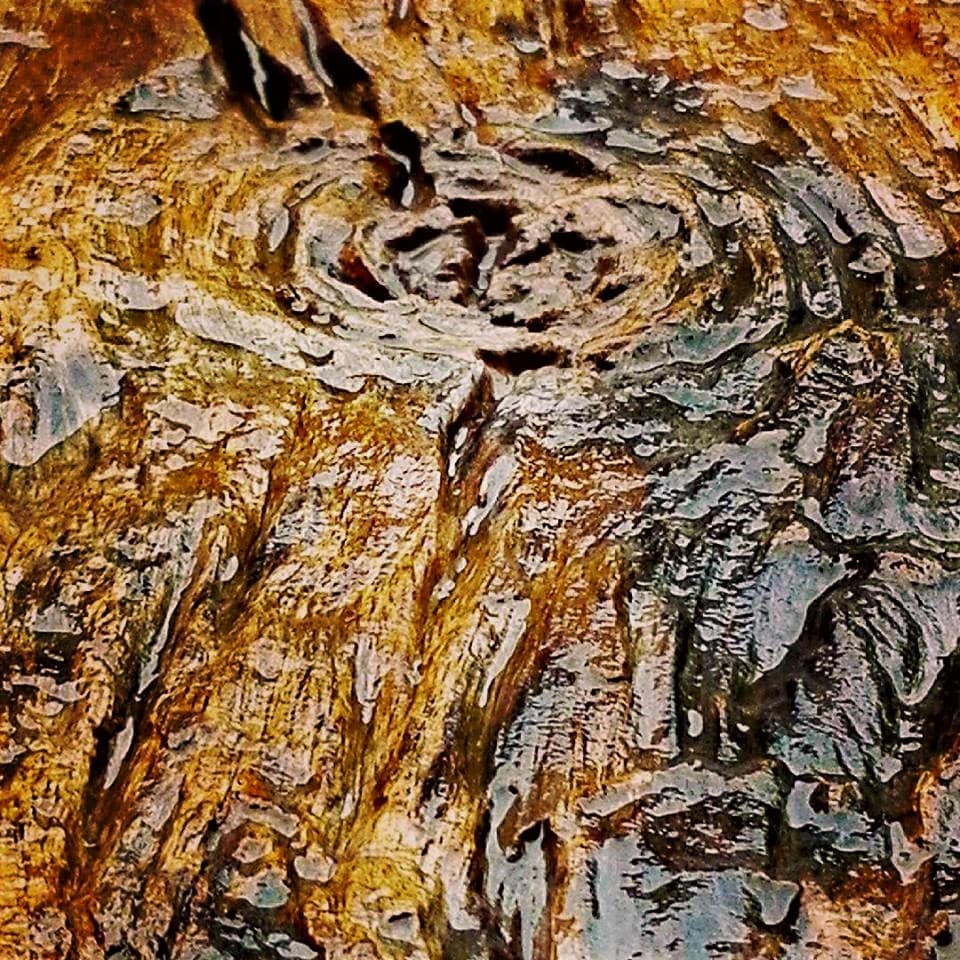
Photograph: Trecherouss Utopiia. Wet wood.jpg. CC BY-SA 4.0. Source on Wikimedia Commons. See all image credits.

Melbourne winters are a gift to biofilm. The sun sits low. The south side of a deck never really dries. Plane trees, liquidambars and a neighbour’s pittosporum deliver a compost of leaves into every gap. By August the boards can look like they have been polished with graphite.
That black is not always “mould” in a laboratory sense. It is a mix of fungi, algae, pollution and fine dirt, held in the raised grain. You do not need the taxonomy. You need friction back.
Safety first, because this is how people fall
Do not oil over it. Do not throw a thin rug on it and call it solved. Wear shoes you can throw away. Keep kids off until it is dry. If the deck is also a stair, treat the stair first; see handrails if people are already sliding toward an edge.
If the timber is structurally soft, stop cleaning and start diagnosing failure. A hose will not glue a joist back.
A cleaning sequence that does not shred the board
Sweep and scoop the gaps. A plastic scraper or a specialist gap tool is worth more than a pressure washer at this stage. Leaves left in grooves reseed the film.
Wet the timber. Apply a deck cleaner suited to the material — hardwood, pine or composite. Soft-bristle brush, with the grain. Let the chemistry work for the minutes on the label, not for an hour while you take a call.
Rinse thoroughly, preferably with a hose or a washer on a wide fan, well back. Close-range pressure raises grain, drives water into the frame, and etches composite caps. You are washing a floor, not stripping a hull.
If the timber stays dark, a brightener can even the colour. If it stays black in patches, those boards may be saturated or rotting. Probe them.
What not to do
Do not mix cleaners. Do not send runoff into a fish pond or a freshly planted bed without rinsing and diluting; many products are unkind to frogs and tomatoes. Do not use a wire brush on merbau unless you like scratches that collect the next film.
Do not “seal” a still-damp deck the same afternoon. That is how you trap the circus under a skin. Wait for the dry window, then decide on oil or silver.
Make next August easier
Prune for light on the south face if you can do it without ruining the garden. Move the permanent pot that sits in a puddle. Fix the downpipe that drips. Improve fall and gaps. Scoop leaves in June, not only in spring.
A deciduous tree over a deck is a bargain in summer and a job in winter. If you built around a tree, the collar needs the same scoop.
Composite is not exempt. It can be more slippery than timber when filmed. Wash it on the same calendar.
A Melbourne deck that is washed when the wattle starts is a deck you can walk on in September. That is the whole winter strategy: chemistry once, a hose, and less compost in the gaps.
Composite, pine and hardwood are not the same patient
Hardwood holds the film in the grain. A soft brush and a proper cleaner usually lift it. Pine fuzzes if you scrub like you are angry; once the fibres stand up they hold the next winter even better. Composite holds slime in the embossing; the brand will have a cleaner it will not void a warranty over. Use that, not a kitchen degreaser you liked on the barbecue.
If you have mixed materials — a hardwood deck, a composite stair, a pine bench — clean them as three jobs. The runoff from a hardwood brightener is not automatically kind to a composite cap.
A spring calendar that fits a working week
Saturday morning: scoop gaps and sweep. Saturday afternoon: apply cleaner, brush, rinse. Leave it. Sunday: if it is dry and you oil, oil. If it is not dry, do not oil. The discipline is the dry day, not the product.
If you only have one day, clean and walk away. A clean, silver-grey deck is safer than a dirty deck with a fresh coat of oil on damp mould.
Put the gap scoop in the same season you clean gutters. The leaves are the same leaves.
Winter will come back. The film will try to come back. A deck that is washed when the days lengthen is a deck you can trust on the first warm evening, which is the whole point of owning one in this city.
Plants, pets and runoff
Deck cleaners are not salad dressing. Keep the dog off until the rinse is done. Water the adjacent ferns with clean water first so they are less thirsty for the chemical. Divert the first flush away from a fish pond if you have one.
Some people swear by oxygen bleaches; some brands want their own mix. Read the label for the timber you have, not the timber you wish you had. Merbau can go patchy with the wrong acid. Composite can haze.
If a patch remains after two careful washes, it may be the board, not the film. Replacement of two south-edge boards is cheaper than a third tin of hope.
Why the south side always loses
In this city the south face of a deck is a different climate. It may not see useful sun from April to September. That is enough time for a film to become a skating rink. Design helps: a lighter board, more gap, fewer pots, a downpipe that does not drip. Maintenance still wins.
If you can prune one limb and gain an hour of winter sun, do it. If you cannot, accept a twice-yearly wash as the price of the tree.
People who oil the north and ignore the south create a two-tone floor and a two-tone slip risk. Wash the whole plane. Oil, if you oil, the thirsty parts more thinly on the damp side.
A Melbourne winter is not a failure of timber. It is a season. Meet it with a brush and a dry week, and the first warm evening will feel like you earned it.
Questions we are asked
- Is the black film dangerous?
- It is mostly a slip hazard and a look. Some people are sensitive to moulds. The bigger risk on a deck is falling, not a medical drama. Clean it, dry it, and fix the shade and leaf litter that feed it.
- Will bleach fix a mouldy deck?
- Household bleach can lighten a stain and also damage nearby plants, metal and some timbers. Use a product labelled for outdoor timber or composite, rinse well, and do not treat bleach as a personality.
Canonical URL: https://deckingmelbourne.com.au/articles/cleaning-black-mould-after-winter