Staining, oiling or leaving a Melbourne deck to silver
Colour is a maintenance contract. Oil, stain and bare silver all work in Victoria if you pick one and keep the water moving. Mixing them is how decks go blotchy.
By Priya Menon, Materials writer · 9 July 2025 · Updated 1 March 2026
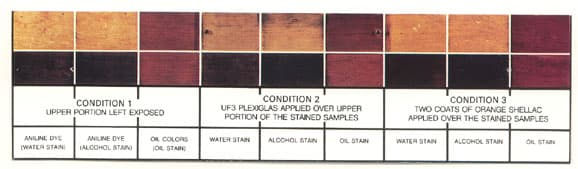
Photograph: Mike Wiltshire. Stain samples.jpg. Public domain. Source on Wikimedia Commons. See all image credits.

A deck finish is not a personality test. It is a decision about water, ultraviolet light, and how much of your October you will spend on your knees. Melbourne makes that decision sharper than a Brisbane or Perth brochure suggests. We have a wet winter that grows film, a hard summer that cooks oil, and a spring that people use to coat timber that is still damp from September.
There are three honest options for outdoor hardwood and pine. Penetrating oil. A stain or semi-transparent colour that still behaves like a penetrating system. Or no film at all — silvering — with cleaning as the only ritual. Film-forming deck paints and cheap hardware varnishes are a fourth option that we will treat as a warning.
Oil, and what it is for
A penetrating deck oil soaks into the face, feeds the fibres, and leaves little or nothing sitting as a plastic skin. Good oils for Victorian hardwoods are usually a blend of natural oils and solvents with UV filters. They deepen colour, slow the silvering, and make the first summer of a merbau deck look like the sample you were shown.
They do not waterproof a deck the way a membrane waterproofs a bathroom. Water will still enter gaps. Oil that is applied too heavily becomes a tacky dust magnet, especially on merbau. Oil that is applied in a heatwave skins before it penetrates. Oil that is applied over mould paints the mould a richer colour.
The rhythm in Melbourne is: wash in early spring, let the timber dry through a run of clear days, oil in mild weather, wipe excess, and stay off it until it is no longer greasy. North-facing decks in Newport or Altona may want oil every year if you care about colour. A shaded courtyard in the Dandenongs may want less oil and more washing. Details live in oiling a hardwood deck.
Stain, when you want even colour
Stain is oil with pigment, or a dedicated semi-transparent colour engineered for decks. The pigment helps with UV, which is why a lightly stained spotted-gum deck can look more even than an oiled one after three summers. It is also why a heavy stain can hide the grain you paid for.
Use stain when boards are mixed — a repair next to old timber, or reclaimed stock with a dozen histories — and you want the deck to read as one surface. Use it when the architecture wants a darker plane and the species will not get there on its own.
Do not use a thick, film-forming “deck paint” on a horizontal walking surface and expect it to last. It will peel in sheets after the first wet winter and the first hot January, and then you will sand for a week. If you have inherited a painted pine deck, the kindest long-term path is often strip, assess, and either recoat with a proper system or replace the wearing surface.
Test stain on a spare board, in sun and shade. Melbourne light is cool; colours that looked warm in a fluorescent warehouse go muddy outside.
Silvering, which is a finish, not neglect
Leaving timber to weather is a legitimate specification. Ultraviolet light breaks down lignin in the surface; rain washes it; the board goes grey. On spotted gum and many eucalypts that grey can be handsome if it is even. On merbau it is often blotchy because eaves, furniture and a barbecue all cast different UV doses.
Silvering still needs work. You wash. You keep leaves out of gaps. You accept that the south side will be greener. You do not suddenly oil one half of the deck because a guest said it looked tired. Partial oiling is how you get a map of the furniture.
If the house is a low-maintenance Peninsula place, silvering plus a good wash twice a year is often smarter than a finish you will not be there to maintain. If the deck is the main outdoor room of a Fitzroy terrace, you may want the deeper colour of oil because you will see it every evening.
The mistakes that age a deck in a season
Coating wet timber. Coating in full western sun. Mixing brands in the same year without stripping. Using a high-pressure washer until the grain stands up like a hedgehog, then oiling the fuzz. Letting a film product “just this once” land on a previously oiled board.
Species matters. Merbau and spotted gum take oil differently. Pine fuzzes if you over-clean it. Composite should not be oiled at all; it should be washed. See composite in Victoria.
Whatever you choose, write it down. The next owner, or the next you in five years, should know whether this surface is meant to be silver or honey. A finish is a contract with future weekends. Pick one you will keep.
Tests, samples and the board you should have kept
Keep an offcut in the shed. Every year, test the cleaner and the oil on it. Your deck is not the place for a first experiment with a new tint.
Photograph the deck in July and in February. You will forget how blotchy the south side was. The photographs are how you decide whether silvering is working or whether you need a brightener.
Switching systems
To go from oil to silver, stop oiling and wash. Time will do the rest, unevenly. To go from silver to oil, clean and brighten first or the oil will sit on dirt. To go from a failed film to anything, remove the film. There is no product that “reactivates” a peeling paint into a penetrating oil.
Pick a system that matches the life you have, not the life in the brochure. Melbourne will enforce the contract.
A one-line specification for the next owner
Leave a card in the meter box: “This deck is oiled / stained / silvered. Cleaner used: X. Last done: date.” The next person will bless you or ignore you, but the timber will have a chance to stay in one system.
That is the whole philosophy. One system, kept.
Questions we are asked
- Can I stain a deck that has already gone grey?
- Yes, after a proper clean and, usually, a light sand or a timber brightener so the new colour can key. Stain over dirt and leftover oil becomes a peeling film.
- How often should I oil a hardwood deck in Melbourne?
- Once a year is a reasonable rhythm for a north-facing deck you want to keep honey-coloured. South-facing or heavily shaded decks may need washing more often than oiling. Never oil a wet board or a 35-degree afternoon.
Canonical URL: https://deckingmelbourne.com.au/articles/staining-vs-oiling-vs-silvering