Recycled and reclaimed timber decking in Victoria
Old hardwood can make a better deck than a new packet of merbau — or a worse one, if the bolts, nails and mystery species are treated as charm. How to source and specify reclaimed boards in Melbourne.
By Priya Menon, Materials writer · 6 May 2025 · Updated 14 February 2026
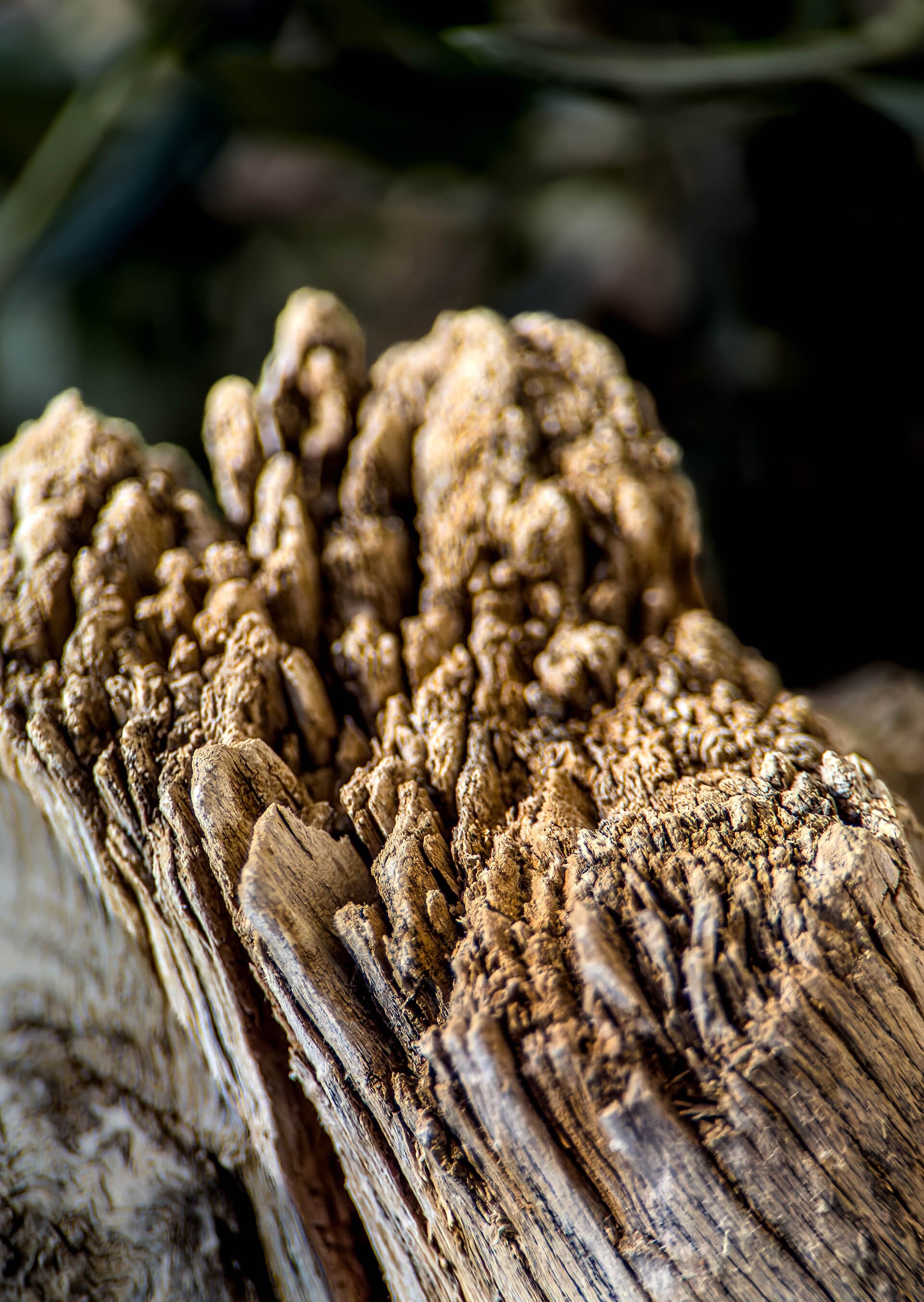
Photograph: MacrofyStudio. Weathered wood grain texture macro closeup detail.jpg. CC BY 4.0. Source on Wikimedia Commons. See all image credits.

Melbourne has a century of hardwood sitting in warehouses from Brooklyn to Campbellfield: factory bearers, wharf stock, school gym floors, bridge decking, and the occasional church pew that someone will try to sell you as a stair tread. Reclaimed timber can make a deck with a gravity that new merbau does not have. It can also make a deck that is a museum of nails, poison paint and boards that will not sit flat.
The difference is specification. “Recycled hardwood” is not a grade. It is a pile. You need to know the species if possible, the section, the contamination, and what you are willing to pay a machinist to do.
What is actually in the pile
True reclaimed decking is rare. What you are usually buying is structural hardwood that will be resawn and dressed into decking. Ironbark, tallowwood, blackbutt, spotted gum and grey box turn up. So do mystery red boards that are probably imported merbau from a 1990s pergola, and painted pine that has no business outdoors again.
Ask to walk the stack. Look for consistent thickness after dressing — 19 mm or 21 mm finished is usable; 15 mm is a floor, not a deck. Look for end split, termite galleries, and the shadow of old bolt holes. Holes can be charming on a table. On a walking surface they collect water and heels.
Lead paint is the quiet hazard. Any painted piece from before the 1970s should be tested or rejected for a deck that children will sit on. Old oil stains and grease from factories are less toxic and more annoying; they bleed through new coatings. Creosote sleepers are not decking. They are a contamination problem and, in many settings, a legal one.
Machining, moisture and the romance of rust
A yard that can mill to a consistent profile is worth more than a yard with a good Instagram. Reclaimed hardwood is hard on knives. A cheap dressing job leaves burn marks and a thickness that varies by three millimetres, which you will feel in every step. Specify a dressed face, arrised edges, and a thickness the joist layout can support.
Moisture is awkward. Old timber is often drier than new imported stock, which is good, until it sits under a leaking warehouse roof and then goes into a heated house wrap. Acclimatise boards on site, stacked with strips, out of the weather, for as long as the programme allows. Laying wet reclaimed hardwood in a hot week is how you get gaps you could lose a phone in.
Metal in the timber will find your sawblade. Budget for that. A magnetic sweep after ripping is not optional if kids will be barefoot. Stainless fasteners into old hardwood still need pilots. The board is harder than the screw’s opinion.
Structure and the temptation to underspecify
People spend the timber budget on the pretty face and then span it like a cheap pine deck. Reclaimed ironbark at 19 mm still needs joist centres that match the thickness and the way it is fixed. If the boards are mixed widths — a look some designers want — the joists must be dead flat or the deck will read as a country road.
Hidden clips are usually a bad fit. Old hardwood is not grooved for a clip, and cutting a groove into ironbark is a special kind of optimism. Top-fix, two stainless screws per joist, and a pattern you can live with. If you want an invisible fastener, new hardwood or composite is the cleaner path.
The frame can be new treated pine or new hardwood. Mixing reclaimed bearers into a new job is possible and sometimes beautiful; it is also how you import old termite galleries into a new house. Have a pest inspection mindset, not a salvage-yard mindset, when the timber goes near a dwelling.
Finish, silver and the Melbourne light
Reclaimed hardwood often looks best slightly oiled in the first six months, then left to even out. The boards already have a history of sun and grease; a heavy stain will sit on that history and peel. A penetrating oil shows the tool marks and the colour variation that you paid for.
If the brief is a pale, coastal silver — a Mornington house that should not look like a museum — you can skip oil and accept that some boards will stay darker where old finish remains. A light sand after laying, not a furniture polish, is usually enough.
Tannin run-off is less dramatic than new merbau but not zero. Wash adjacent masonry. Keep the fall. Reclaimed timber does not exempt you from drainage.
Cost and when the romance is worth it
By the time you have bought the stack, paid for milling, rejected a third, and paid a carpenter who is slower because every board is a decision, reclaimed can cost more than new spotted gum. You are paying for character and, if you care, for not cutting a new tree for a wearing surface.
It is worth it on a small, visible courtyard where the timber is the architecture. It is rarely worth it on a 80-square-metre entertaining deck that also has to be poolside and slip-resistant. For large, low-maintenance areas, new hardwood or composite is more honest.
If you go reclaimed, write a specification: species preference, finished thickness, maximum defect, no sleepers, no painted unknown, stainless only, joist centres, and a sample board signed off before the pack is dressed. Charm is not a building tolerance.
Where to buy, and who to avoid
A yard that can tell you the source, the likely species, and what they will do when they hit a bolt is a yard. A trailer on a nature strip with “recycled hardwood!!!!” is a gamble that often includes painted pine and a sleeper.
Ask about machining lead times. Reclaimed is not a warehouse pick-up. Build the programme around the mill, not around your preferred party date.
Living with a history
Old timber will move less than green imported stock if it is dry, and more if it has been sitting in the rain behind the yard. It will also show every previous life in the finish. That is the point. If you want an even chocolate plane, buy new merbau.
A reclaimed deck that was specified, milled and fixed with stainless is one of the most satisfying outdoor floors in Melbourne. A reclaimed deck that was a bargain pile is a weekend of nails. Pay for the first.
Questions we are asked
- Is reclaimed timber stronger than new decking?
- Often the old Australian hardwoods are denser than the imported boards sold as “decking grade”. Strength still depends on section size, defects, and whether the joists match. A beautiful 19 mm face on a 300 mm joist span is still a trampoline.
- Do I need to treat reclaimed hardwood?
- Most old ironbark, tallowwood and grey gum do not need a preservative. They need cleaning, possible dressing, stainless fasteners, and a decision about oil versus silver. Any painted softwood in the pile should be treated as suspect.
Canonical URL: https://deckingmelbourne.com.au/articles/recycled-reclaimed-timber-decking