How much a new deck costs in Melbourne
2026 price bands for timber and composite decks in Melbourne, what pushes a job from a simple platform into a small building project, and the line items people forget to budget.
By Eleanor Hart, Editor · 14 August 2025 · Updated 2 April 2026
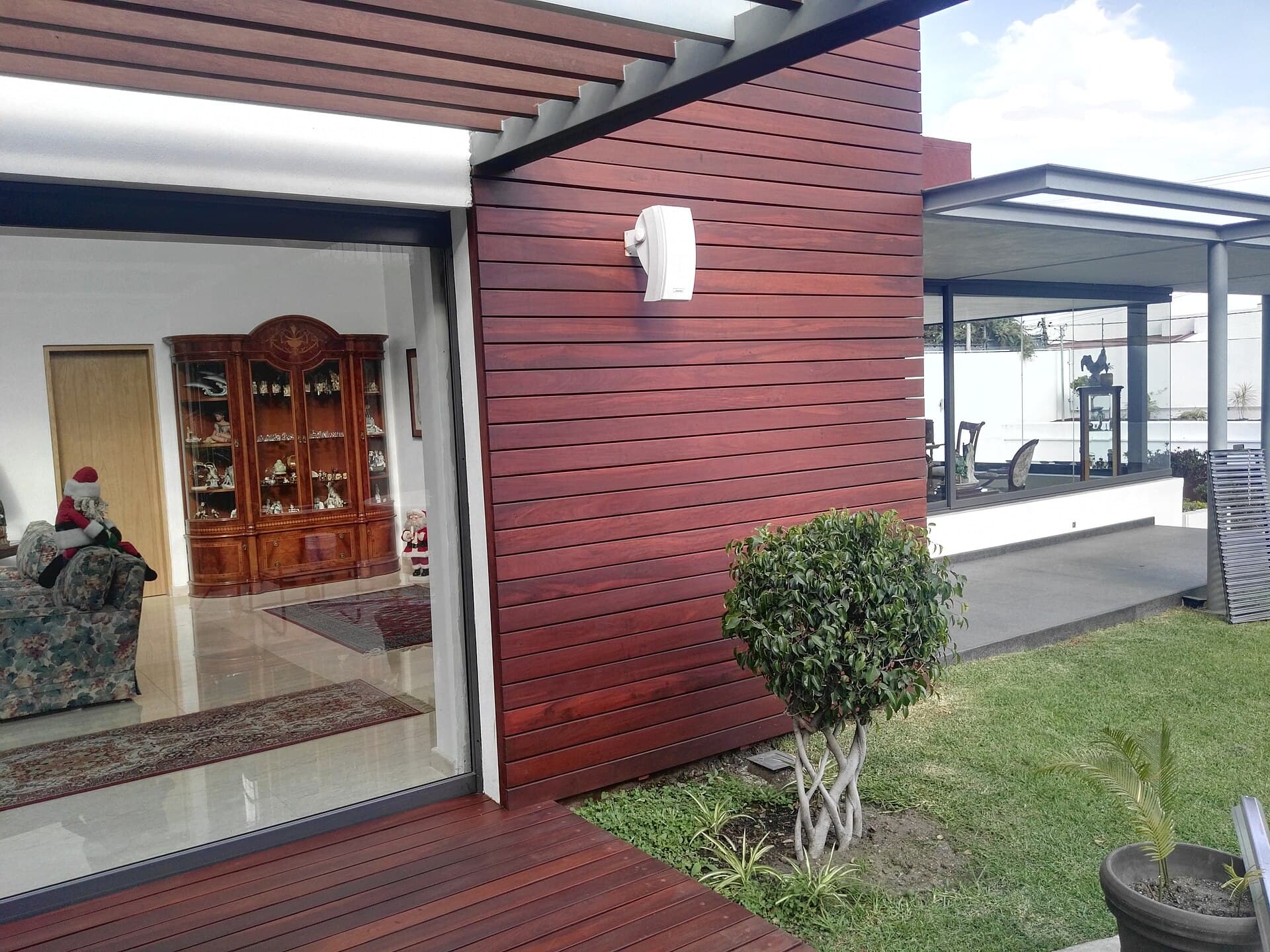
Photograph: MDEMEXICO. Fachada y deck de madera.jpg. CC0. Source on Wikimedia Commons. See all image credits.

People want a number. The honest number is a range, then a list of the things that kick a job out of the range. Melbourne in 2026 is not a cheap place to build anything that needs a licensed trade, a skip, and a week of not parking in your own driveway. A deck is still one of the more predictable outdoor projects — until it is a waterproofed lid, a sloping block, or a heritage overlay.
Figures below are typical installed bands talked about on ordinary suburban jobs, in Australian dollars, not quotes. Get three written prices. Read them as specifications, not as vibes.
The simple platform
A rectangular, near-ground deck on a level backyard, treated-pine frame, treated-pine or modest hardwood boards, a couple of steps, no roof, no screen, decent access down the side: this is the job every carpenter has a rhythm for. It is also the job that marketing photos pretend is every job.
In this band you are paying for labour, a skip, stainless or specified fasteners, and timber that has a known section size. The square-metre rate looks friendly until you add demolition of an old rotting deck, a concrete path that has to be cut, or a garden bed that has to be rebuilt because the new fall sends water into it.
If this is your brief, do not dress it up. A good pine deck, oiled or silvered, is a better spend than a thin hardwood face on an underspecified frame.
Hardwood, composite and the middle band
Switch the wearing surface to spotted gum or merbau, or to a capped composite, and the material line rises. Labour rises too: hardwood is slower to fix, composite is fussy about clips and gaps. Add a proper balustrade when the drop requires one — see raised decks and NCC handrails — and you have left the simple-platform band.
This is where most family decks in the middle suburbs live: 30 to 50 square metres, a stair, a bit of screening, maybe a built-in bench. The variation between quotes is usually stairs, steel versus timber posts, and whether the carpenter has allowed for council paper.
Composite can look cheaper on a supply list and then match hardwood once you tighten joist centres and buy the brand clips. Price the system.
The project that is no longer “just a deck”
Waterproofing over a rumpus room. A sloping block that needs posts, beams and an engineer. A tree that must stay. A balcony with an owners corporation. A bushfire overlay. A roof or pergola that turns the deck into an outdoor room. An outdoor kitchen with gas, water and a grease story.
Each of those is a different trade conversation. Waterproofing alone can rival the timber cost. Engineering on a steep Eltham block can exceed the price of the boards. If your quote does not mention these when the site has them, the quote is not cheap. It is incomplete.
Access is a silent multiplier. A terrace in Fitzroy with no side gate means everything over the roof or through the house. Price the protection and the extra days.
Line items people forget
Skip and tip fees for the old deck. Temporary fencing if the backyard becomes a site. Temporary stairs so the family can leave the house. Making good the render where the old ledger was. Stormwater connection if you are collecting a roof. Screens after a planner asks for them. Oil, if you want colour in year one. Lighting, if you will actually use the deck after 6 pm — see lighting.
GST. Contingency. The week of rain in the programme.
Permits have their own fees. They are usually smaller than the variation caused by guessing wrong about whether you needed one.
How to read a quote
Ask what is excluded. Ask for joist centres, species, hazard class, fastener grade, and whether demolition is in. Ask who applies for the building permit. Ask how wet weather is handled. Ask for a programme that includes dry days after oil, if oil is in the contract.
The cheapest number is not always the pine deck. Sometimes it is the carpenter who assumed H3 posts in the ground, or who assumed you would oil it yourself from a ladder over a stair with no handrail.
If you are hiring, read choosing a contractor before you send the deposit. Money follows specification. Write the deck you want, then price it. The other way around is how Melbourne backyards collect half-finished timber.
Labour, weather and the week that doubles
Carpenters price days. A week of northerlies that stop oiling, or a week of rain that stops footings, is a variation even if nobody wants to say it. A fixed-price contract should say who wears wet weather. If it does not, you do.
Access is labour. Stairs through the house, a crane for steel, parking permits in the inner north — these are line items. The cheapest suburban rate assumes a gate and a barrow.
What “value” looks like in year eight
The cheap deck that needs new boards in six years was not cheap. The hardwood deck that was never oiled and went blotchy was not a failure of species. The composite deck that was never washed and became a rink was not a failure of polymer.
Value is a dry frame, a wearing surface that matches how you live, and a file of permits. Compare quotes on those, not on the headline square-metre number a salesperson said at the showroom.
If the number still hurts, shrink the deck, not the joist. A smaller, honest platform in spotted gum is a better Melbourne object than a huge, thin pine stage you do not trust.
Questions we are asked
- What is a realistic cost per square metre for a Melbourne deck?
- Simple treated-pine platforms can still land toward the lower end of four figures per square metre installed. Hardwood and composite with a proper frame, stairs and a balustrade more often sit higher. Unusual access, waterproofing and engineering move the number faster than the timber species.
- Why do quotes for the same size deck differ so much?
- Because one quote is a wearing surface on an assumed frame and the other is a building project: footings, steel, screens, permits and a skip. Ask for the same inclusions, in writing, before you compare.
Canonical URL: https://deckingmelbourne.com.au/articles/how-much-does-a-deck-cost-melbourne