Bushfire-prone decking and BAL ratings on Melbourne's fringe
On the urban edge a deck is part of the house's fire armour. What BAL ratings mean for timber, composite and the gap under the boards in Victoria.
By James Calder, Landscape writer · 2 September 2025 · Updated 8 March 2026
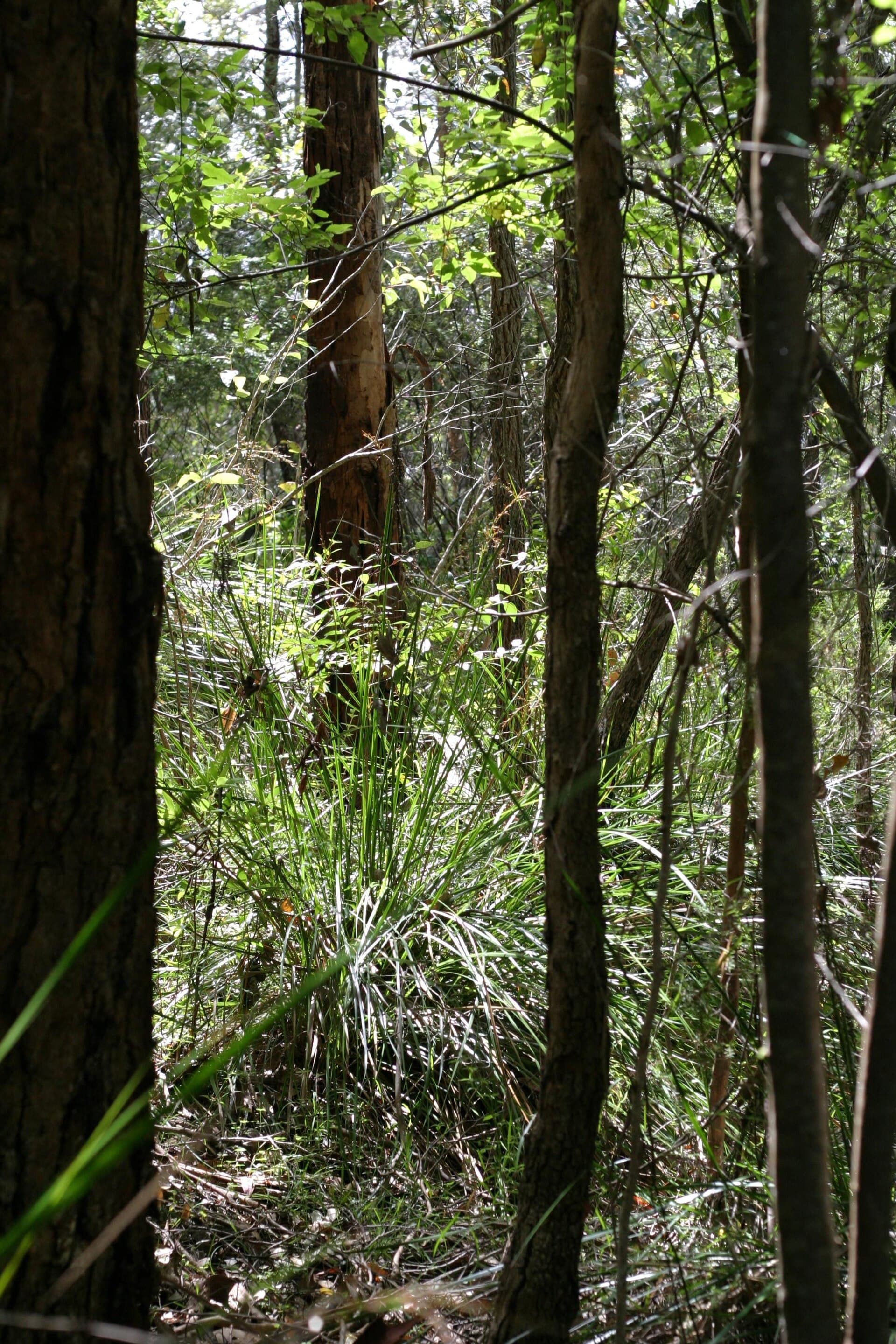
Photograph: Leon Brooks. Bushland.jpg. Public domain. Source on Wikimedia Commons. See all image credits.

The pretty deck on a Warrandyte slope, an Eltham stringybark block, or a new house at the edge of Melton, sits in a different legal climate from a Brunswick courtyard. Victoria maps bushfire risk. The Building Code, through AS 3959, then asks your house — and the deck attached to it — to be built to a Bushfire Attack Level. Ember, heat, flame. The letters on the report are not a vibe.
If you ignore them, you can still build a beautiful platform. You may not get a permit, an insurance conversation, or a house that behaves when the sky goes orange.
What a BAL report is telling you
BAL-LOW through BAL-FZ is a scale of exposure. A site assessment looks at vegetation, slope and distance. Slope matters because fire runs uphill; a deck downhill of a grass slope is not the same as a deck on a flat suburban lot with mown lawn.
The report then drives construction: windows, doors, eaves, and yes, decks. At higher BALs the deck is a pathway for embers under the house and a pile of fuel against the wall. The details that feel fussy — closing the perimeter, non-combustible steps, keeping mulch away — are the details that show up in post-fire photographs.
Get the assessment before you design the dream timber. A spotted-gum deck that is legal at one BAL may not be legal at the next. Moving the deck, changing the vegetation management, or stepping the house can change the number. That is design, not defeat.
Timber, tests and the species people assume
Australian hardwoods have a better story than untreated pine. Some species and thicknesses are recognised in the standard for particular BALs. “Hardwood” as a sales word is not a recognition. You need the species, the density, the thickness, and the way the deck is attached.
Merbau’s tropical glamour does not automatically translate into a BAL tick. Treated pine is usually the first thing to fall off the list as the BAL rises. Reclaimed ironbark might be dense and still fail the documentation test because nobody tested that pile.
At higher levels, a non-combustible wearing surface — some fibre-cement systems, some metal, some specific composites — becomes the grown-up choice. It will not smell like timber. It might keep the house.
The gap under the deck is the ember bed
Embers do not need a flame front. They need a gap, some leaf litter, and time. An open undercroft full of stored cardboard and a timber ladder is a gift. AS 3959 thinking wants you to enclose, mesh, or otherwise deny that space, in the way the BAL requires.
Keep the zone against the house clean. Do not stack firewood under the deck. Do not run a garden bed of dry mulch into the ledger. If you want the look of a floating timber plane, ask the designer how that plane meets the ember rules. Beauty and a 2 mm mesh can coexist if someone draws it.
Process, insurance and the fringe suburbs
Building surveyors on the urban fringe will ask for the BAL and for a specification that matches. A quote that does not mention it on a mapped block is incomplete. See what a deck costs — the assessment and the possible material upgrade belong in the budget.
Insurers have their own questions after fire seasons. A lawful BAL construction is not a promise they will be kind; it is the minimum adult paperwork.
If your block is BAL-LOW or not mapped, this article is context, not a demand to sheath everything in metal. If your block is mapped, treat the deck as part of the house armour. Then pick a colour.
For the ordinary suburban case with no overlay, return to permits and to species that suit weather rather than flame. For the fringe, start with the map.
Attachments, stairs and the house wall
A deck that hangs off a weatherboard wall is a shelf of fuel against the thing you are trying to protect. At higher BALs the junction wants non-combustible cladding, closed gaps, and a stair that does not store last summer’s chairs in the undercroft. Even at moderate levels, keeping mulch and timber stacks off the ledger is free performance.
Stairs are often forgotten in the BAL conversation and then built in untreated pine because “they’re just stairs”. They are a path for embers and people. Use the same honesty you used on the main plane.
Garages, water tanks and the deck can form a cluster. A tank on the downhill side is useful water; a deck that traps leaf litter against the tank is useful fuel. Draw the cluster.
Living with a BAL deck
The material choice is only half. The other half is the week before a bad forecast: gutters, the undercroft, the doormat that is a wad of dry fibre, the wicker box. A lawful deck does not exempt you from housekeeping.
If you are buying a house on the fringe with a pretty untreated pine platform, budget a conversation with a surveyor before you budget new oil. The previous owner’s taste is not a BAL certificate.
Melbourne’s edge suburbs will keep growing into grass and stringybark. The deck you build there is part of the house’s skin. Specify it with the report on the table, not with a hardware flyer that never mentioned flame.
Insurance, sales and the report you keep
Keep the BAL assessment, the specification and the surveyor’s documents with the house papers. The next buyer, the next broker and the next fire season will ask. A pretty deck with no file is a delay at the worst time.
If you change vegetation — cutting a copse, letting a hedge become a wall — the assessed BAL can theoretically shift. Do not treat the garden as unrelated to the timber. On the fringe they are one project.
None of this is a reason not to have a deck on a beautiful block. It is a reason to have a lawful one. The light on stringybark at 5 pm is still worth the paperwork.
Questions we are asked
- Can I use timber decking in a BAL-29 area?
- Sometimes, if the species, thickness and detailing meet AS 3959 for that level and the rest of the house is built to match. Many common imported decking boards will not qualify. You need the standard, not a hardware label that says “fire resistant”.
- Does composite melt in a bushfire?
- Some composites soften and some are tested to particular BAL levels. Untested plastic boards are the wrong material on a mapped site. Ask for the test report that matches your BAL, and for how the gap at the house is closed.
Canonical URL: https://deckingmelbourne.com.au/articles/bushfire-prone-decking-bal